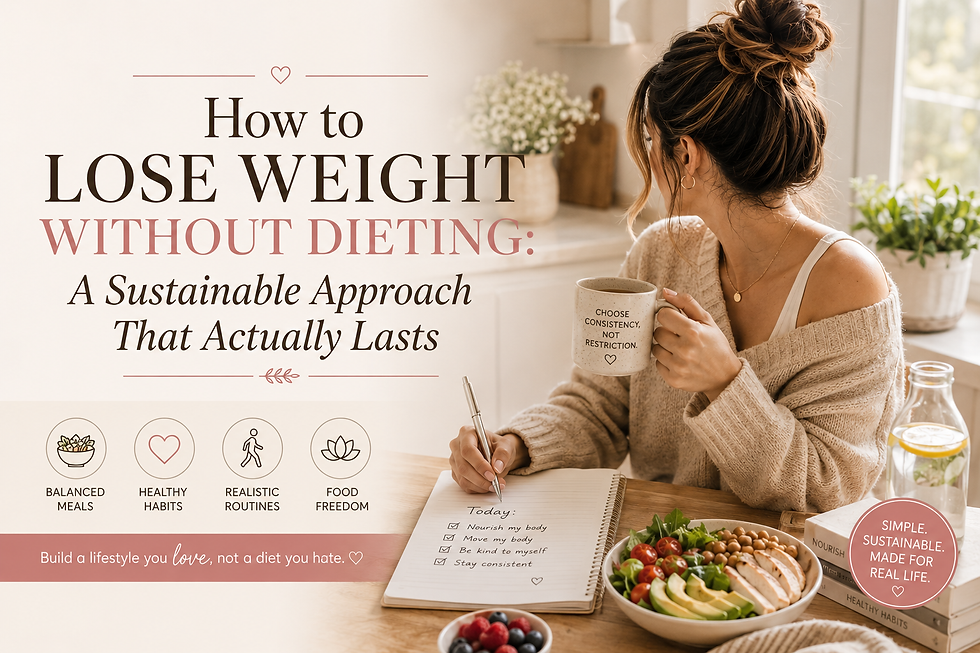
How to Lose Weight Without Dieting: A Sustainable Approach That Actually Lasts

Updated: Aug 15
Maybe this isn't your first attempt.
Maybe you've already tried low carb.
Keto.
Intermittent fasting.
Counting calories.
Meal replacement shakes.
Detox plans.
Thirty-day challenges.
Or one of the countless "lifestyle changes" that somehow ended up feeling exactly like another diet.
Maybe some of them even worked.
For a while.
You lost a few kilograms.
People noticed.
You felt hopeful.
Then life happened.
A stressful week at work.
A holiday.
A birthday.
A family dinner.
One takeaway.
A weekend away.
Suddenly the rules became harder to follow.
One "off-plan" meal became an "off-plan" day.
The day became a week.
And eventually you found yourself saying the same words you've probably said before:
"I'll start again on Monday."
If that cycle feels painfully familiar, I want you to know something.
The problem may not be that you lack discipline.
The problem may be that you've been trying to build a lifelong lifestyle using short-term rules.
If you've been searching for how to lose weight without dieting, you're probably not looking for another list of forbidden foods.
You're looking for a way of eating that still works when life becomes busy.
And that's exactly what this article is about.
Can You Really Lose Weight Without Dieting?
The short answer is:
Yes.
But before we go any further, let's define what we mean by "dieting."
Many people use the word diet to describe any attempt to lose weight.
That's not what we're talking about here.
We're talking about restrictive dieting.
The kind that creates long lists of foods you "can't" eat.
The kind that makes dinner with friends feel stressful.
The kind that convinces you that eating one cookie means you've failed.
The kind that only works as long as life remains perfectly under control.
Losing weight doesn't require living like that forever.
Your body doesn't respond to whether you're following a popular diet.
It responds to the habits you repeat consistently over time.
That's an important difference.
Because sustainable weight loss isn't about finding stricter rules.
It's about building a way of eating that you can genuinely imagine following next year—not just next Monday.
Why Most Diets Work... Until They Don't
One reason diets are so confusing is that many of them do work—at least in the beginning.
When you eat fewer calories than your body uses, weight loss can happen.
That's why people often see quick results during the first weeks of a new diet.
The problem usually isn't the first month.
The problem is what happens after.
Because life doesn't stay perfectly organised forever.
Stress appears.
Schedules change.
Family celebrations happen.
Travelling happens.
Exhaustion happens.
Real life happens.
And if your entire plan depends on perfect conditions, eventually those conditions disappear.
That's why so many women believe they "failed" another diet.
In reality, the plan often failed to fit a real human life.
The goal isn't to find a diet you can survive for six weeks.
The goal is to create habits you don't feel desperate to escape from.
You Don't Need Another Diet. You Need Better Skills.
One of the biggest misconceptions about weight loss is that success comes from finding the "perfect" diet.
In reality, lasting success comes from building the skills that make healthy choices feel easier over time.
Think about it this way.
Nobody is born knowing how to build a balanced meal.
Nobody automatically knows how to navigate a restaurant menu, recover after overeating or plan healthy meals during a busy week.
These are learned skills.
And unlike diets, they don't expire after thirty days.
Instead of asking yourself:
"What's the next diet I should try?"
Try asking:
"What skill would make healthy eating easier for me this month?"
Maybe it's learning how to prepare simple protein-rich breakfasts.
Maybe it's planning three easy dinners before the week begins.
Maybe it's recognising emotional hunger before opening the fridge.
These small improvements may not feel dramatic.
But together, they create something much more valuable than another short-term transformation.
They create confidence.
The All-or-Nothing Trap That Keeps You Stuck
Have you ever noticed how quickly one small choice can turn into giving up completely?
You eat one slice of cake.
Then you think:
"I've already ruined today."
So lunch becomes takeaway.
Dinner becomes whatever is easiest.
By Sunday evening you're promising yourself that Monday will be different.
Again.
This pattern has a name.
It's called all-or-nothing thinking, and it's one of the biggest reasons people feel trapped in the dieting cycle.
Healthy eating isn't destroyed by one meal.
Weight loss isn't ruined by one dessert.
Your body doesn't work that way.
What matters far more is what happens next.
Do you continue eating normally?
Or do you convince yourself you've failed?
One meal is just one meal.
It only becomes a setback when it turns into a reason to quit.
The women who maintain their weight long term aren't perfect.
They simply recover faster.
How to Lose Weight Without Dieting by Building Better Habits
If you've been searching for how to lose weight without dieting, the answer probably isn't another list of foods to avoid.
It's creating habits that naturally support your goals.
That might look like:
Building balanced meals instead of skipping meals.
Choosing protein at every meal to help you stay satisfied.
Filling half your plate with vegetables most of the time.
Drinking enough water throughout the day.
Keeping simple, nutritious foods available at home.
Walking after dinner whenever possible.
Sleeping enough to support your appetite and energy levels.
None of these habits are exciting.
None of them promise rapid weight loss.
But together, they create an environment where losing weight becomes much easier—and maintaining it becomes realistic.
The goal isn't to be perfect.
The goal is to make healthy choices the easiest choices most days.
Build Meals, Not Food Rules
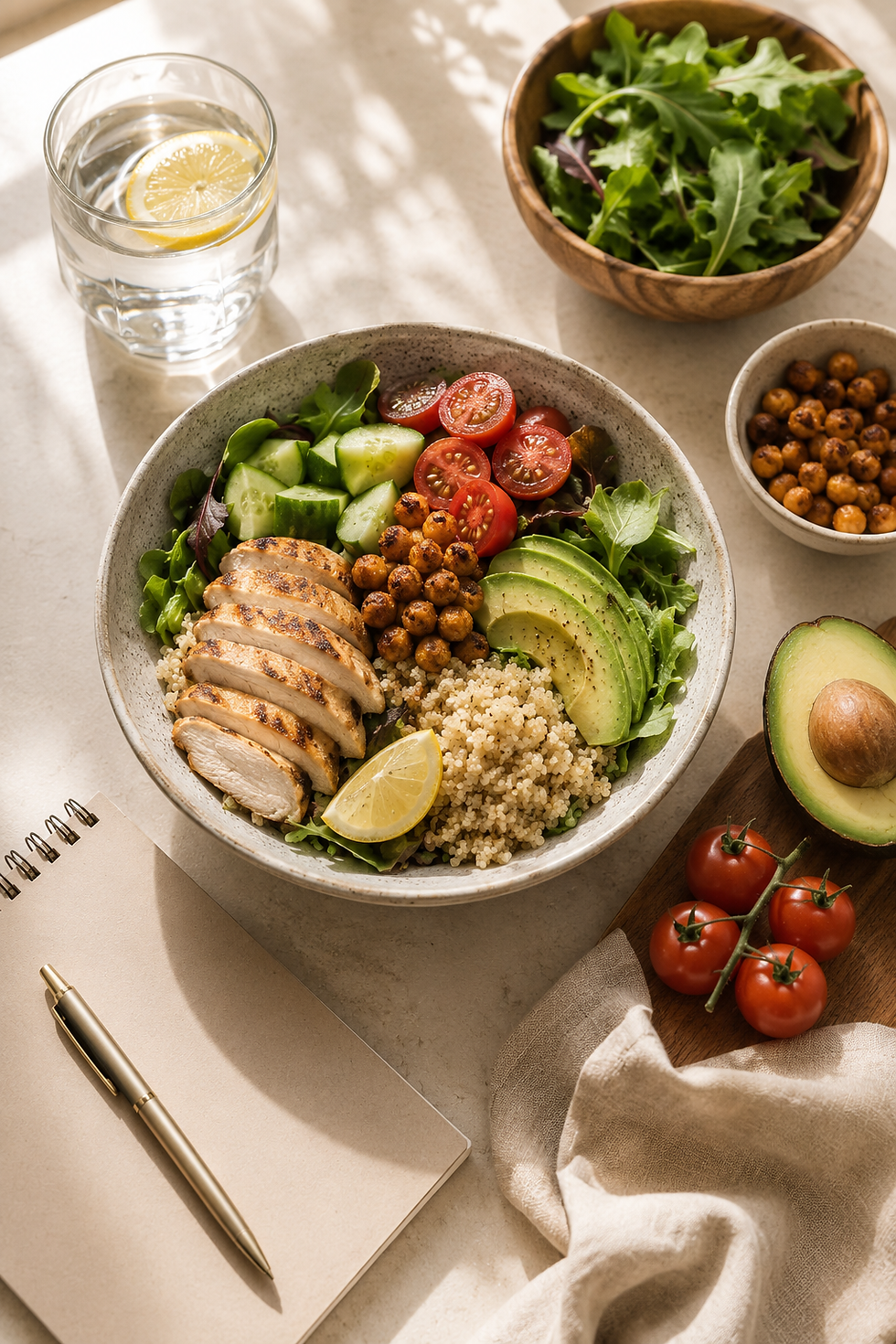
Many diets teach you to divide food into two categories.
Good foods.
Bad foods.
Allowed foods.
Forbidden foods.
But food isn't that simple.
Instead of asking:
"Can I eat this?"
Try asking:
"How can I make this meal more balanced?"
Adding grilled chicken to pasta.
Including vegetables with dinner.
Pairing fruit with Greek yogurt.
Adding beans to soup.
Small changes like these help meals become more satisfying without making eating feel restrictive.
This simple shift also makes healthy eating much easier to maintain because you're adding nourishment instead of constantly taking foods away.
Free Resource
If you'd like a simple visual framework for building satisfying meals without counting every calorie, download the Build Your Plate Guide. It shows you how to create balanced plates using everyday foods—without complicated rules or meal plans.
Food Freedom Doesn't Mean Eating Everything All the Time
One misunderstanding about sustainable weight loss is the idea that giving yourself freedom means eating whatever you want whenever you want.
That's not what food freedom means.
Food freedom means removing guilt—not removing awareness.
It means enjoying birthday cake without believing you've failed.
It means ordering pizza with friends without deciding the week is ruined.
It means choosing vegetables because they help you feel good, not because you're trying to "earn" dessert later.
When food stops being the enemy, healthy choices often become much easier to make.
Because they're no longer driven by fear.
They're driven by self-care.
The Foods You Eat Every Day Matter More Than the Foods You Eat Occasionally
Many women spend far too much energy worrying about special occasions.
Christmas.
Birthdays.
Vacations.
Weekend dinners.
But these events make up only a tiny part of the year.
Your body responds much more to what you eat on an ordinary Tuesday than what you eat on Christmas Day.
The breakfast you repeat every morning matters more than the dessert you enjoy once a month.
The lunch you pack for work matters more than one restaurant meal.
Long-term weight loss is built through ordinary days.
Not perfect days.
That's good news.
Because ordinary days happen much more often.
Stop Restarting. Start Recovering.
One of the most powerful habits you can develop isn't perfect eating.
It's recovery.
Everyone overeats sometimes.
Everyone has stressful weeks.
Everyone experiences holidays, celebrations and unexpected changes.
These moments don't determine your success.
Your next decision does.
Instead of saying:
"I'll start again next Monday."
Try saying:
"My next meal will simply be a balanced one."
That small shift changes everything.
It replaces guilt with action.
And action always moves you forward.
The 80% Principle: Why Consistency Beats Perfection
One of the biggest reasons people give up on healthy eating is because they believe they need to do everything perfectly.
Perfect breakfast.
Perfect lunch.
Perfect dinner.
Perfect workouts.
Perfect weekends.
Perfect holidays.
The truth is, perfection isn't required for progress.
Imagine two women.
The first follows her healthy habits perfectly for two weeks.
Then life gets busy, she falls off track, and gives up completely.
The second woman isn't perfect.
She enjoys birthday cake.
Orders takeaway sometimes.
Misses a workout occasionally.
But she keeps returning to her healthy habits.
Month after month.
Year after year.
Who do you think is more likely to maintain her weight?
The answer isn't perfection.
It's consistency.
Healthy habits repeated often enough will always outperform perfect habits that only last a few weeks.
What Sustainable Weight Loss Really Looks Like
Social media often makes weight loss look dramatic.
Strict meal plans.
Extreme before-and-after photos.
Fast transformations.
But sustainable weight loss usually looks much quieter.
It looks like grocery shopping with a plan.
Cooking simple meals more often.
Walking after dinner.
Choosing protein because you enjoy how it makes you feel.
Drinking water before reaching for another snack.
Having dessert without guilt.
Going on holiday without fear.
Returning to your routine afterwards.
It doesn't look exciting.
It looks normal.
And that's exactly why it lasts.
If your healthy lifestyle only works under perfect conditions, it's probably too complicated.
The simpler your routine becomes, the easier it is to repeat.
And repetition is where lasting change happens.
Frequently Asked Questions
Can I lose weight without dieting?
Yes.
You don't need a restrictive diet to lose weight. Sustainable weight loss comes from consistently eating in a way that supports your body's energy needs while building habits you can realistically maintain long term.
Do I need to count calories?
Not necessarily.
Some people find calorie tracking helpful, while others find it stressful or difficult to maintain.
Many women make excellent progress simply by focusing on balanced meals, eating enough protein, managing portions naturally and becoming more aware of hunger and fullness cues.
The best approach is the one you can realistically continue.
Can I still eat bread, pasta or chocolate?
Absolutely.
No single food causes weight gain on its own.
Weight change is influenced by your overall eating pattern over time.
Learning how to include foods you enjoy—without guilt or extremes—is often far more sustainable than constantly trying to eliminate them.
What if I overeat?
One meal doesn't undo weeks of healthy habits.
Avoid trying to compensate by skipping meals or punishing yourself with excessive exercise.
Instead, simply return to your usual routine at your next meal.
Recovery is far more powerful than restarting.
How long does sustainable weight loss take?
Usually longer than social media suggests.
But that's not a bad thing.
Slow, consistent progress is often much easier to maintain than rapid weight loss achieved through highly restrictive diets.
Your goal isn't simply to lose weight.
It's to avoid needing to lose the same weight again.
When Emotional Eating Is Part of the Picture

Sometimes the challenge isn't knowing what to eat.
It's eating when you're stressed.
Lonely.
Overwhelmed.
Exhausted.
Or simply looking for comfort after a difficult day.
If food has become your way of coping with emotions, another diet probably won't solve the real problem.
Understanding your triggers and learning different ways to respond can make healthy eating feel much more natural.
Free Resource
If emotional eating is something you struggle with, download the Emotional Eating Reset. It's a compassionate guide designed to help you recognise triggers, pause before reacting and gently return to your healthy habits—without guilt or punishment.
Final Thoughts
If you've spent years searching for the perfect diet, I hope you leave this article with a different question.
Not:
"Which diet should I try next?"
But:
"What kind of lifestyle do I actually want to build?"
Because lasting weight loss isn't created by following the strictest rules.
It's created by repeating realistic habits that fit your real life.
Some days will feel easy.
Others won't.
You'll have celebrations.
Busy weeks.
Holidays.
Stressful moments.
Meals that are wonderfully balanced.
Meals that aren't.
None of those moments define your success.
Your willingness to come back does.
You don't need another Monday.
You don't need another "fresh start."
You don't need another diet.
You need a lifestyle that still works on ordinary Tuesdays.
Because that's where real transformation happens.
Not through perfection.
But through consistency, self-compassion and small choices repeated over time.
Ready to Build a Healthier Lifestyle?
If you're ready to stop dieting and start building habits that actually last, these free resources can help:
Build Your Plate Guide – Learn how to create balanced, satisfying meals without restrictive food rules.
Healthy Grocery List – Stock your kitchen with simple, nutritious foods that make healthy eating easier.
Emotional Eating Reset – Understand your triggers and build a healthier response to emotional eating.
Or
Weight Loss Starter Guide – Your step-by-step introduction to sustainable weight loss and realistic healthy habits.
Remember, you don't have to change everything overnight.
Start with one meal.
One habit.
One small decision.
Those small decisions, repeated consistently, are what create lasting change.


Comments